- ABC of Mental Health
- Posts
- Is Romanticising the Past Good for You?


Hello! Welcome to another edition of ABC of Mental Health, your partner in the journey to better mental health, one newsletter at a time.
Have you ever found yourself revisiting old songs, conversations, or memories, not just to remember, but to feel something familiar again? Sometimes, what we long for isn’t the past itself, it’s safety. This edition explores the psychology behind nostalgia and how it can gently pull us away from the present, and how to stay connected to what we need now.
If you like what you read here, click to share this newsletter via WhatsApp today! 😊
One relevant recommendation:
The Power Of Nostalgia by Cheyne Gallarde (5-minute video)
In this insightful talk, Cheyne Gallarde, American queer illustrator, actor and photographer, suggests that nostalgia can be a powerful psychological refuge for the present. The video explores how our favourite memories aren't just about our sentiments but also serve as a stabilising tool, providing comfort during distress. It’s a must-watch for anyone who feels guilty for being sentimental about the past.
Two Quotes on Memories and Meaning:
Beloved honey-loving, fictional, anthropomorphic teddy bear, Winnie the Pooh (A.A. Milne), on the value of the experience itself:
"How lucky I am to have something that makes saying goodbye so hard."
Marcel Proust, renowned French novelist, essayist, and critic, on memory and reconstruction:
“Remembrance of things past is not necessarily the remembrance of things as they were.”
Three TherapyShorts from TST:
Nostalgia often holds a feeling, not just a memory
When we long for the past, it’s rarely about the exact moment itself. Rather, it’s about what that moment represented: perhaps a time we felt more seen, less burdened, or more hopeful. When our brain oversimplifies the past, it highlights comfort while softening our past challenges, making the present feel lacking by comparison. Often, it’s not the past we need to return to, it’s the feeling. Pause and check-in: “What feeling am I actually longing for when I think about the past?”
Familiarity can feel safe, but it isn’t always
Our brains are wired to prefer familiarity over uncertainty. Sometimes, we may revisit old relationships, patterns, or identities, not because they were good for us, but because they are more predictable. The present, with all its uncertainty, can feel scarier than a familiar discomfort. But safety isn’t always found in what’s known; it’s built in what feels supportive. Growth often requires us to tolerate the discomfort of the unfamiliar. It’s worth exploring: “Am I missing the past, or how predictable it felt?”
When nostalgia pulls us away from the present
Nostalgia can become a quiet escape when the present feels overwhelming, uncertain, or unfulfilling. We might find ourselves mentally “living” in old memories instead of being present. While this offers temporary comfort, it can disconnect us from current relationships, opportunities, and needs. The goal isn’t to reject nostalgia, but to remain grounded while visiting it. If you find yourself stuck in nostalgia, ask yourself: “When you visit the past, what feels harder to face in the present?”
A QUICK QUESTION…
When you think about the past, what do you usually feel? Vote here!
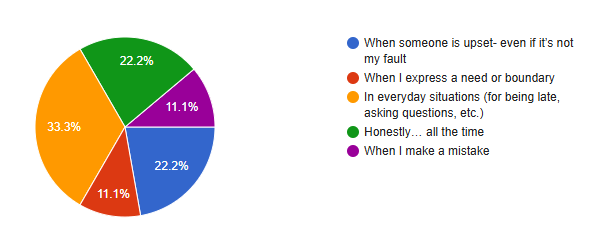
Last week, we asked you when do you find yourself apologizing the most, and the responses were… (drumroll please)…
With care and compassion,
The Social Therapist
Reply