- ABC of Mental Health
- Posts
- Starting 2026 with Ease, Not Pressure


Hello! Welcome to another edition of ABC of Mental Health, your partner in the journey to better mental health, one newsletter at a time.
The start of a new year often brings pressure: resolutions, goals, and the urge to “do it all.” But change doesn’t need to be loud or rushed. Let's explore how small, sustainable actions create space for growth, self-compassion, and resilience.
If you like what you read here, click to share this newsletter via WhatsApp today! 😊
One relevant recommendation:
Make a Vision Board (30 minute activity)
Design a vision board that reflects how you would like to feel this year, not just what you want to do. Use images, words, colours, or symbols that represent what you value most. For example: rest, compassion, kindness, activities, etc. Include reminders of the qualities, skills, and abilities you already carry and allow the board to make space for who you are becoming. Ask yourself when you look at the board, “What would a kind, not a perfect, step towards this feeling look like today?”
Two Quotes on Rest & Inner Strength:
James Clear, author and habit expert, on small, consistent actions:
“Habits are the compound interest of self-improvement.”
John Steinbeck, author, on being kind while making progress:
“And now that you don't have to be perfect, you can be good.”
Three TherapyShorts from TST
Letting go of the “perfect” start
Many of us enter a new year thinking we must start perfectly with the “right” habits, routines, and mindset, which can be counterproductive. A gentle beginning is about setting the right intentions and exploring microactions to build momentum without exhausting your energy. For example, you can start with micro-actions, such as a two-minute meditation, a single journaling prompt, or a slow walk outside for 5-10 minutes. Ask yourself what a gentle first step look like for you today.Setting intentions, not resolutions
New Year’s resolutions often come with heavy pressure: “I must change everything now.” A soft start shifts focus from rigid goals to gentle intentions. Intentions are flexible and guided by what feels nourishing, not punishing. For example, instead of saying, “I must exercise daily,” try, “I intend to move my body in ways that feel good this week.” This reframing creates space for consistency without guilt and encourages self-trust.
Allowing space for mixed feelings
A new year often begins with pressure to feel hopeful, motivated, or geared up for change, but many of us start with mixed feelings of joy, guilt, fatigue, confusion, and caution all at once. Soft beginnings allow us to hold space for both and be honest about where we are. Use this prompt to check-in with yourself: “Right now, a part of me feels ___, and another part of me feels ___ about 2026.”
A QUICK QUESTION…
What usually slows you down at the start of something new? Vote here!
Last week, we asked you what you need the most as you end the year, and the responses were… (drumroll please)…
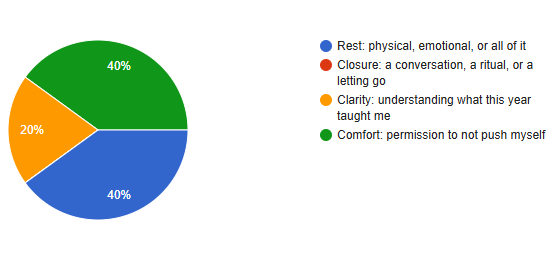
With care and compassion,
The Social Therapist
—
You’re receiving this email because you showed an interest in therapy, mental health, and/or well-being at The Social Therapist. If at any point you’d like to stop receiving this weekly newsletter aimed at improving mental health, please feel free to unsubscribe below. We’d hate to see you go, but we completely respect your decision to leave :)
Reply