- ABC of Mental Health
- Posts
- The Subtle Ways You Abandon Yourself


Hello! Welcome to another edition of ABC of Mental Health, your partner in the journey to better mental health, one newsletter at a time.
Self-abandonment doesn’t always look dramatic. It’s not always walking away from yourself in obvious ways. Sometimes, it’s quieter. It’s saying yes when you want to say no. Laughing something off when it hurts. Ignoring your needs just to keep the peace. This week, we’re exploring the small, everyday ways we disconnect from ourselves, and how to begin coming back.
If you like what you read here, click to share this newsletter via WhatsApp today! 😊
One relevant recommendation:
The “Check-In Before You Say Yes” Practice (30 second activity)
Before agreeing to something, pause for just a few seconds and ask yourself:
Do I actually want to do this?
Am I saying yes out of guilt, fear, or habit?
What would it feel like to say no here?
If it’s a no, try responding with:
“Let me get back to you,” instead of an automatic yes.
Self-trust is built in these small moments. Every time you pause and listen to yourself, you reduce the distance between who you are and how you show up.
Two Quotes on Self-Worth and Boundaries:
William James, American philosopher and psychologist, on the power of belief and deliberate action:
“Act as if what you do makes a difference. It does.”
Glennon Doyle, author and activist, reminds us that self-trust is foundational:
“The braver I am, the luckier I get, and the more I trust myself.”
Three TherapyShorts from TST:
When You Say Yes But Mean No
In sessions, I often hear clients say, “I didn’t want to go, but I didn’t know how to say no.” Over time, these small yeses add up into resentment, exhaustion, and disconnection from self. Many of us learned early that being liked or accepted meant being agreeable. So saying no feels uncomfortable, even unsafe. But every time you override yourself, you send a message inward: your needs don’t matter as much. The work isn’t to become rigid, it’s to become honest, slowly and safely.
When You Downplay What You Feel
Sometimes self-abandonment sounds like, “It’s not a big deal,” when it actually is. I’ve seen clients minimize hurt, dismiss anger, or laugh through discomfort because acknowledging it feels “too much.” Often, this comes from environments where emotions weren’t welcomed or validated. So you learned to shrink them. But your feelings don’t disappear just because you ignore them, they just go underground. Healing begins when you start taking your own emotional experience seriously, even if no one else ever did.
When You Keep Choosing What Hurts
This is one of the hardest ones to sit with. Clients sometimes notice a pattern, staying in relationships that drain them, tolerating behavior that doesn’t feel okay, or repeatedly putting themselves last. And the immediate response is shame: “Why do I keep doing this?” But in therapy, we slow that down. Because often, these choices once made sense, they were familiar, or felt like the only option. The goal isn’t to judge yourself, but to gently ask: What would choosing myself look like here, even in a small way?
A QUICK QUESTION…
Which of these feels most like you right now? Vote here!
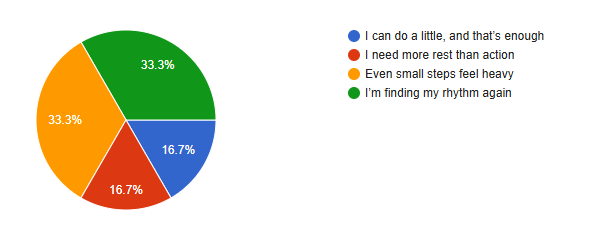
Last week, we asked you what your capacity looks like today, and the responses were… (drumroll please)…
If you've been considering starting therapy, fill out this form (30 seconds), and we promise to take care of the rest.
With care and compassion,
The Social Therapist
Reply