- ABC of Mental Health
- Posts
- When Feelings Aren’t The Problem; Denial is


Hello! Welcome to another edition of ABC of Mental Health, your partner in the journey to better mental health, one newsletter at a time.
We often grow up believing that strong feelings are scary, inconvenient, or signs of weakness. So we learn to minimise them, rationalise them, bury them deep until they feel unrecognisable. When we avoid what hurts, we unintentionally prolong the pain. This edition invites you to meet your emotions with curiosity instead of judgment.
If you like what you read here, click to share this newsletter via WhatsApp today! 😊
One relevant recommendation:
Unlocking Us: Susan David on Emotional Agility (1 hour listen)
In this episode, Susan David reveals how emotional avoidance and the pressure of toxic positivity stifles our growth. David provides strategies to manage feelings effectively and teaches how to show up to our emotions with curiosity, step out of the unhelpful stories we tell ourselves, and align our actions with our values to lead a meaningful life.
Two Quotes on Feeling and Fixing:
Gabor Maté, physician and trauma expert, shares:
“The attempt to escape from pain creates more pain.”
Bell Hooks, writer and cultural critic, reflects:
“What we deny in ourselves, we eventually pass on to those we love.”
Three TherapyShorts from TST
Avoidance as a survival skill
Many of us grew up in environments where avoiding our feelings wasn’t a choice; it was how we kept the peace or protected ourselves from overwhelm. As adults, that same strategy can linger in quieter ways: overthinking, constant busyness, scrolling, numbing, or shutting down. Try gently asking, “What is this part of me trying to protect?” When we meet avoidance with compassion, it starts to soften. Healing doesn’t require diving straight into the deep end. Sometimes the real courage is noticing a feeling and staying with it for just a few seconds longer than before.Explaining is not the same as feeling
Intellectualisation is our brain’s way of staying safe. When emotions feel too big or unfamiliar, we slip into analysing them instead of experiencing them. It's a survival mechanism, but also disconnects from what we actually think. The next time you notice yourself explaining your emotions, pause and gently ask, “Where do I feel this in my body?” Start with one simple sensation: tightness, warmth, heaviness. Noticing helps build the capacity to handle unpleasant emotions without overwhelming us.
We can name our feelings without becoming them
Many of us avoid feeling our feelings because we fear becoming them. But feelings are like waves. They move through us when they’re given just a little space. Try practising, “A part of me feels…” A part of you may feel anxious, overwhelmed, or hurt, but that isn’t the whole of you. This small distance creates a sense of safety without disconnecting us. Naming emotions helps us understand ourselves, not overwhelm ourselves.
A QUICK QUESTION…
What makes it difficult to acknowledge your feelings sometimes? Vote here!
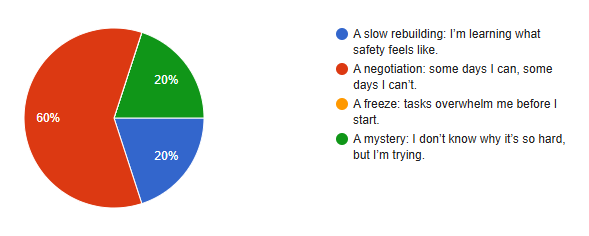
Last week, we asked you what your relationship with being organised most feels like, and the responses were… (drumroll please)…
With care and compassion,
The Social Therapist
—
Reply